Emilian Glocar: Priest, Poet, Painter
Highlights I wanted to share,
the next stories, those I want to tell
Chris Claremont, a Brit by birth, is an American comic book writer and novelist, who worked for Marvel Comics. He once wrote, “The more stories I told, the more I found I wanted to tell. There was always something left unsaid. I got hooked by my own impulse of 'Well, what's gonna happen next?’”
That’s the way I feel about highlighting stuff about Wisconsin for you that cannot be left unsaid.
Claremont expresses my feeling perfectly: “What excites me, what attracts me, what gets me up in the morning is telling the next story and getting it out in front of readers and hoping they'll love it too.”
There is no end to the stories I could tell. I hope you enjoy these.


Click to zoom photo
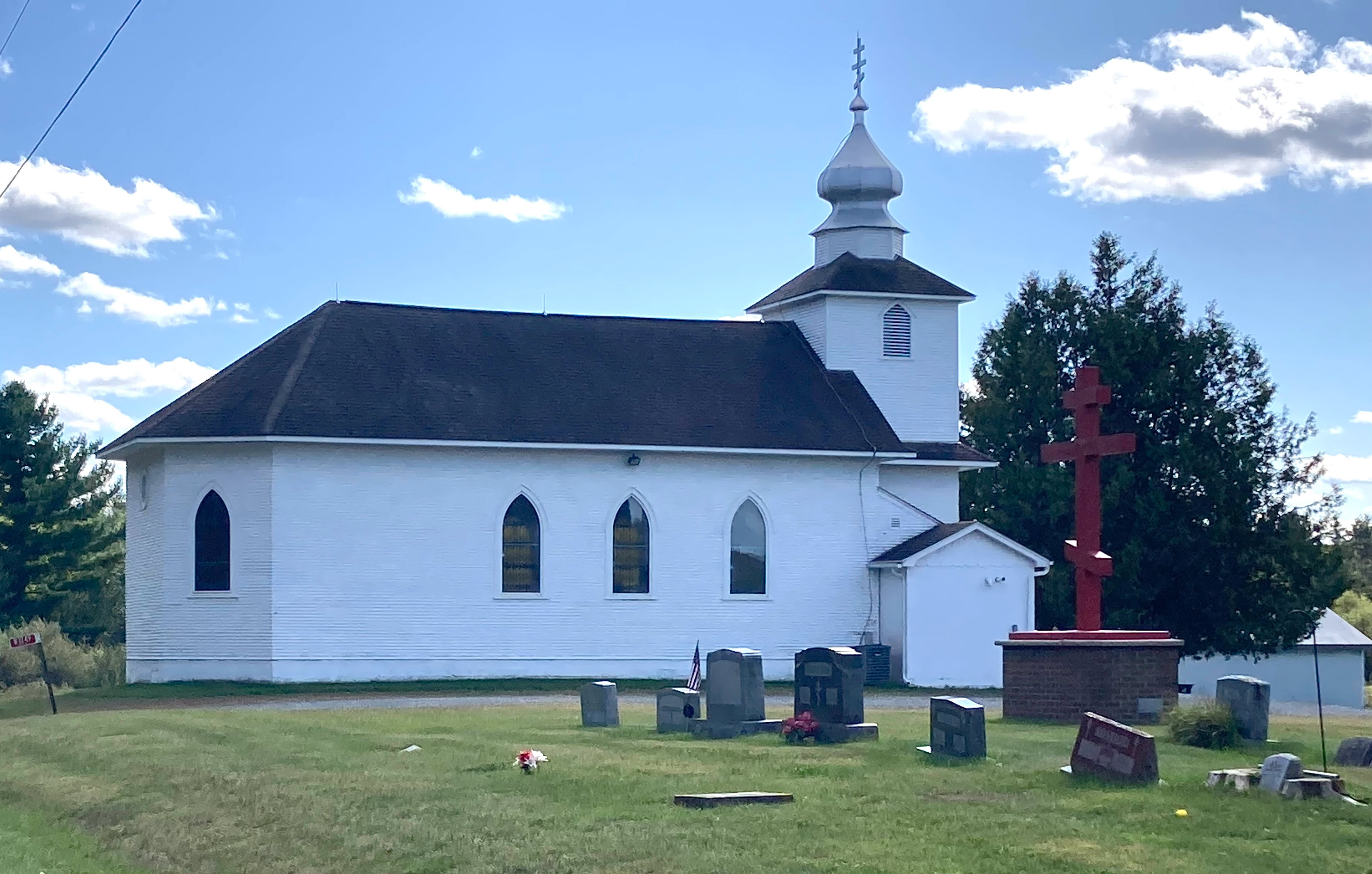
Holy Assumption Orthodox Church
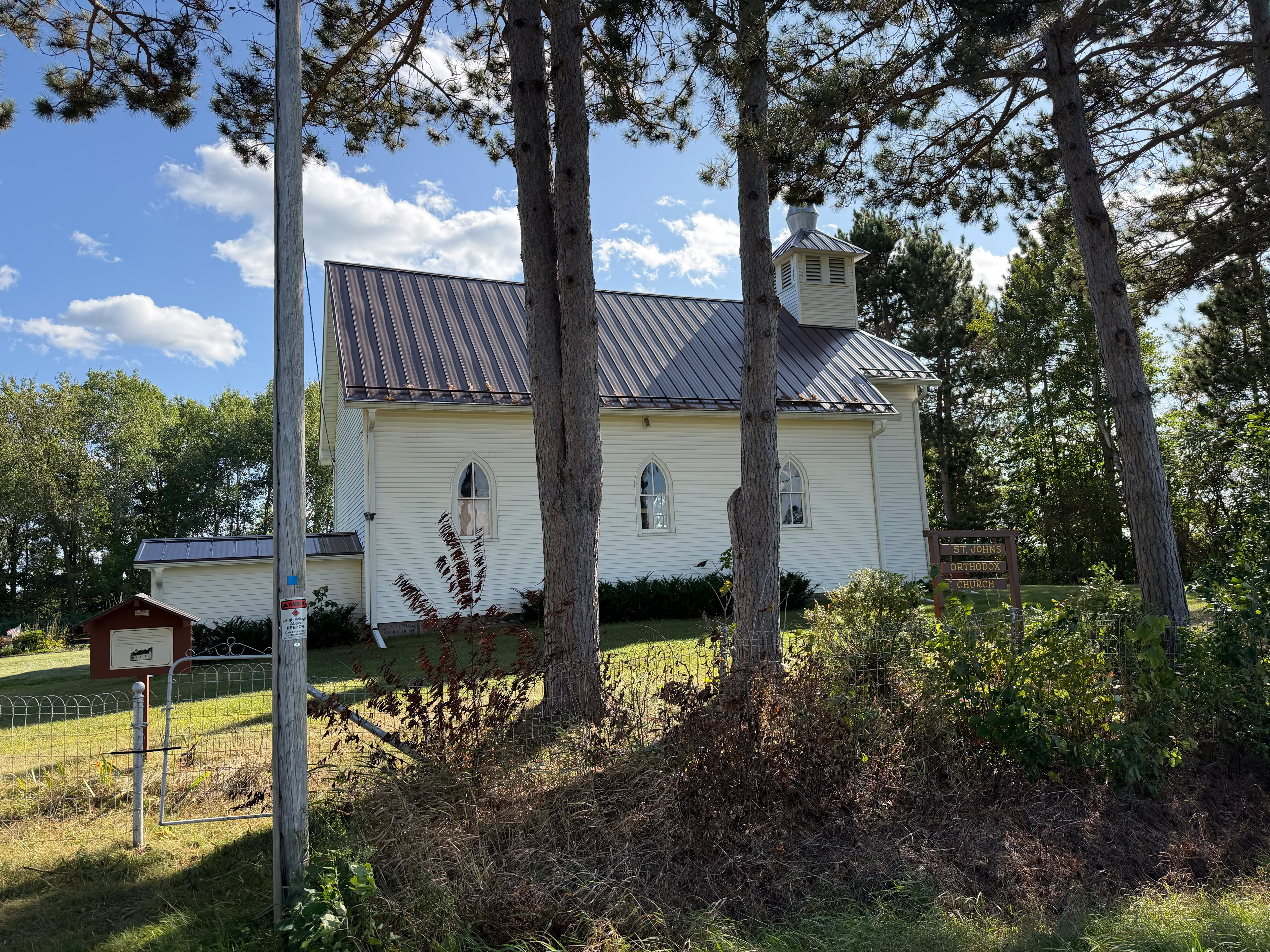
St John the Baptist Orthodox Church
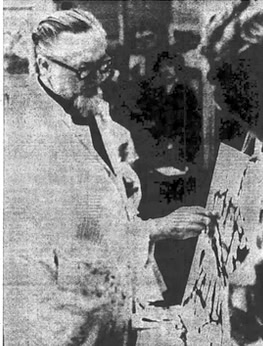
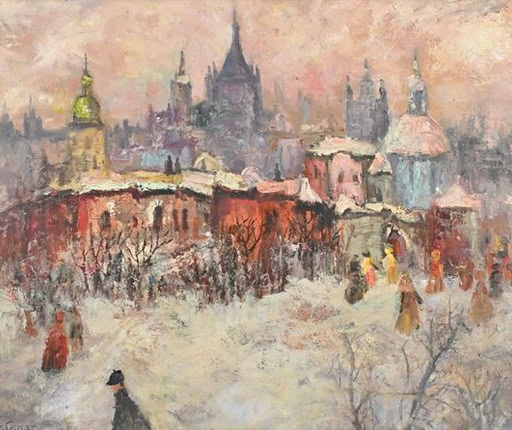
A friend of mine was working at a thrift sale in Eau Claire, spotted a painting by Emilian Glocar, bought it, and then told me his story. It turned out she had met him years earlier and had watched him paint. Glocar’s life story is fascinating, and Eau Claire plays a pivotal role.
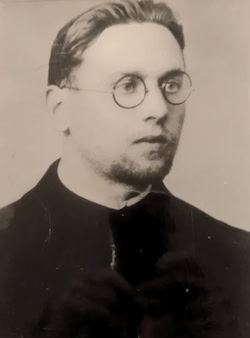
Glocar was born in 1906 in Lukavitce, Moravia, a region in the eastern Czech Republic that was then part of the Austro-Hungarian Empire. His father was killed in WWI, and his mother died the same year. As a result, Emilian was orphaned at age 11. He lived with family members in Zagreb, modern-day Croatia.
The TMORA Museum of Russian Art in Minneapolis has written,
“The early life of Fr. Glocar is a study in the ever-changing and fractured geography of the Balkans and a lesson in Imperial collapse.”
Glocar was baptized a Roman Catholic but later converted to the Holy Orthodox Church. He studied Orthodox theology in Sarajevo, then in part of Yugoslavia, now Bosnia and Herzegovina. He later taught in Prague and completed his studies in Belgrade, Yugoslavia (now Serbia). He didn’t like teaching, so he went to Prague to study theology.
He then decided he wanted to become a priest and serve the Serbian people. For Roman Catholics, the Orthodox Church had a strange rule: its priests had to marry before they could be ordained. He married Bosiljka Parlaceva in 1930, was ordained to the Holy Priesthood, and was assigned to a parish in the small village of Srem in Serbia.
The Sava River flooded in 1932, destroying the village. He was reassigned to a parish in northern Serbia, where he encountered a Serbian religious movement called “Bogomoljacki Pokret.” This put him at odds with the Church.
“Bogomoljacki Pokret” translates to “People’s Christian Community” or " the Movement of those who pray to God.” It was an association within the Serbian Orthodox Church from 1920 until WWII. It aimed to foster interest in the faith and oppose the rise of communism. It also opposed the rise of “Adventism,” a belief in Christ's second coming.
The Community grew among Serbian soldiers during WWI. The Serbian Orthodox Church did not approve of this effort. Serbs suspected an alliance with Judaism. As a result, the Community became anti-Semitic and nationalist, and rejected Western traditions.
The Serbian Orthodox Church leadership worried this Community would become a splinter group or a sect. As a result, the Church sent Father Glocar to Cleveland, Ohio, in 1939 without cause. That proved fortunate for Glocar and his family, since Germany invaded Poland and Czechoslovakia in 1939, resulting in the deaths and imprisonment of tens of thousands of Poles and Czechs.
Fr. Glocar brought his wife and two daughters, Melania and Olga, and worked at Silvia Serbian Orthodox Church in Cleveland. He continued writing and worked to provide relief to the Yugoslav people. After four years in Cleveland, he moved to Akron and to St. Demetrius Serbian Orthodox Church.
Yugoslav President Marshal Josip Broz Tito awarded Glocar in 1946 for his humanitarian work, an honor that did not sit well with members of his parish because Tito was a communist. Although Tito was a communist, he opposed Soviet hegemony and, in particular, Josef Stalin.
Those opposing Fr. Glocar in Akron were hard-hearted anti-communists who publicly opposed his application for US citizenship. That application languished for 13 years until it was approved on appeal in 1958. However, ongoing disputes with his congregation led to his ouster from the Akron parish in 1962-63.
This ouster left Fr. Glocar without a job. He turned to painting and attended the Akron Institute of Art. He exhibited some of his work, earning praise and a few awards.
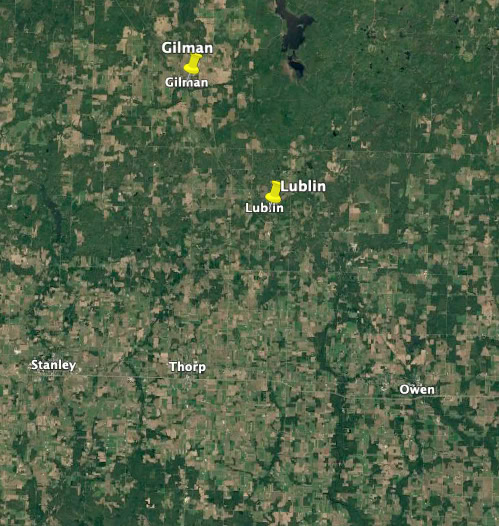
In 1963, the bishop of the Russian Orthodox Church showed compassion for Fr. Glocar and offered him the chance to lead two small parishes in rural Wisconsin: one in Lublin and the other in the city of Gilman, both in Taylor County.
The Lublin church, Holy Assumption Orthodox Church, was founded in 1908. Its first members were Carpatho-Russian-Galicians who came to the US during the Austro-Hungarian Empire, from what is now northern and eastern Slovakia, southeastern Poland, and southwestern Ukraine. This region changed hands among the Czechoslovak Republic, Slovakia, and the USSR between 1919 and 1945 and has endured considerable ethnic strife.
They practiced the Orthodox faith but were administratively under the Eastern Rite Catholic Church (Byzantine Catholic). Once settled in and around Lublin, they built a church to worship, baptize, and educate their children in the Orthodox faith. In the 1950s, the parish decided to return to their roots and voted to rejoin the canonical Orthodox Church.
The other church, Saint John the Baptist Orthodox Church in Gilman, is Wisconsin's oldest Orthodox Church building. The two churches are about eight miles apart, as the crow flies.
Fr. Glocar served at both churches for 18 years.
He left his family behind in Akron and lived in Lublin. His parishioners were poor, so Fr. Glocar converted the Lublin residence into a studio where he painted and taught art. Some in his Lublin parish complained that he was paying too much attention to art and not enough to the parish.
The website Emilian Glocar; a Forgotten Brilliance said,
“The art Director of Stanley-Boyd Area schools, Mrs. Gordon Le Gault, commented,
“‘I have never seen a class that showed such a rapid growth in the technique of handling oils and controlling the expressive power of color that this class has shown.’”
Fr. Glocar was a prolific painter and achieved recognition in Northern Wisconsin. He also wrote several books: Olomoucká trilogie, Olomoucká romance, Magistr Gabriel, písař olomouckýOlomoucká elegi.
In the fall of 1966, Fr. Glocar moved to Eau Claire and rented a studio on downtown Barstow Street. He continued painting, teaching, and exhibiting for the next 10 years. The Tate Gallery in Chicago, a gallery in Minneapolis, and St. Thomas University in St. Paul, Minnesota, exhibited his work. He hosted a special reception and tea in Battle Creek, Michigan, and several artists credited Fr. Glocar as “very influential in their technique and success.”
The Pablo Center at the Confluence in Eau Claire also displayed his art from January through March 30, 2025.
In 1975, the owners of his Eau Claire studio sold it, so he opened a new gallery in Chippewa Falls.
Fr. Glocar ended up at St. Sava Monastery in Libertyville, Illinois, and died in 1984. He was buried there.